
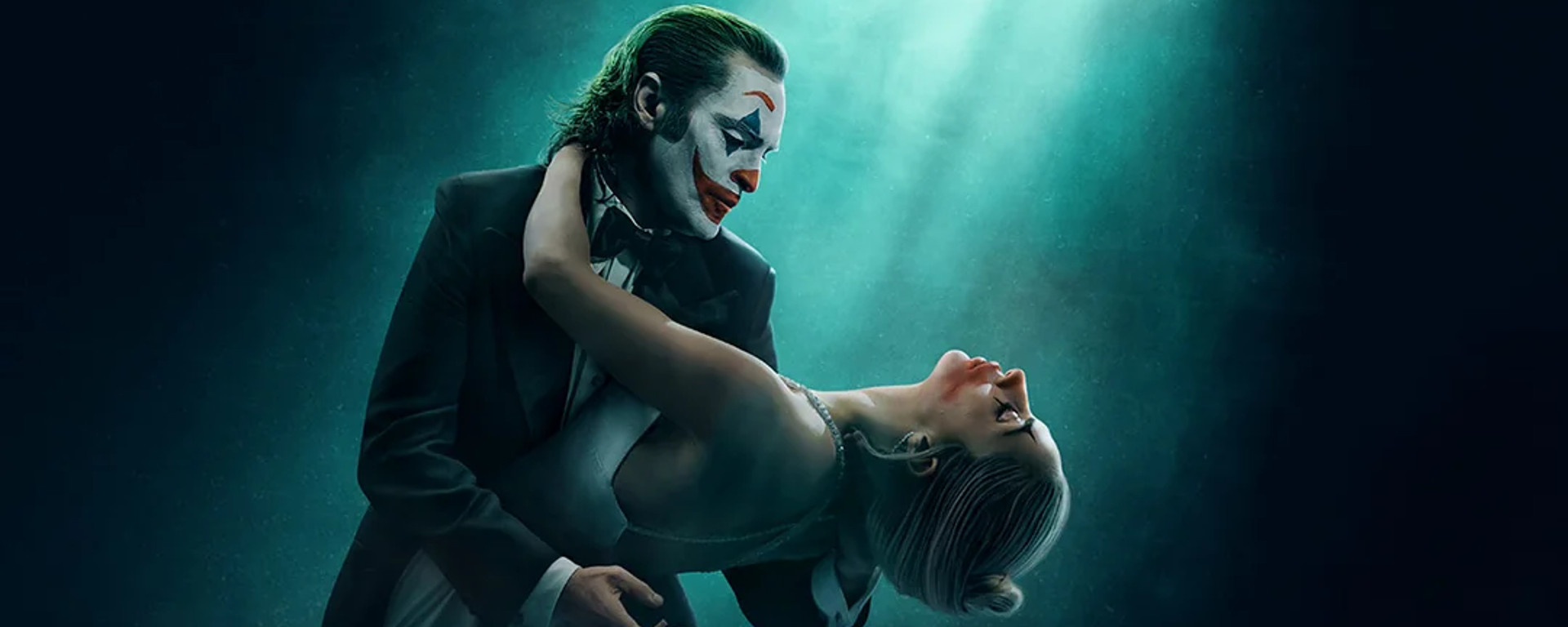
I had no intention of seeing Joker: Folie à Deux. I loathed the original Joker, though I admired aspects of the technical craft behind it. Despite that, I found it overrated and do not believe it deserved the attention and awards that it got five years ago.
I only saw this movie for three reasons. First, because a lot of friends and professional colleagues asked me for my opinion as a scholar of comics and film. Next, because of a morbid curiosity born of the overwhelmingly negative response to the advance screenings. Finally, because I had a craving for the sweet potato fries at the Look Dine-In Cinema this weekend. That last one may seem maddening and illogical, yet it makes as much sense as anything else in Joker: Folie à Deux.
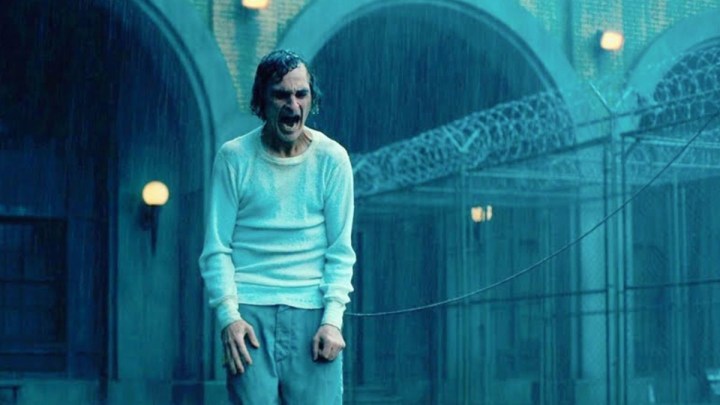
The curtain rises two years after the events of the original Joker. Aspiring comedian/party clown Arthur Fleck (Joaquin Phoenix) is being held in Arkham Asylum in anticipation of his trial on five counts of murder. It is here that meets another inmate, Harleen “Lee” Quinzel (Lady Gaga) during a music therapy class. Lee is a admirer of his “work” and tells him about all the fans he’s acquired since the riot inspired by his actions.
Love (or something like it) blooms, but Arthur still seems to have trouble separating fantasy from reality. This prompts his attorney to push for an insanity defense, based around the idea that Arthur and The Joker are two separate people. The exploration of this idea, as well as Arthur’s conflicted feelings of acquiring the fame and love he dreamed of by being Joker instead of himself, are delivered through multiple ornate musical sequences.
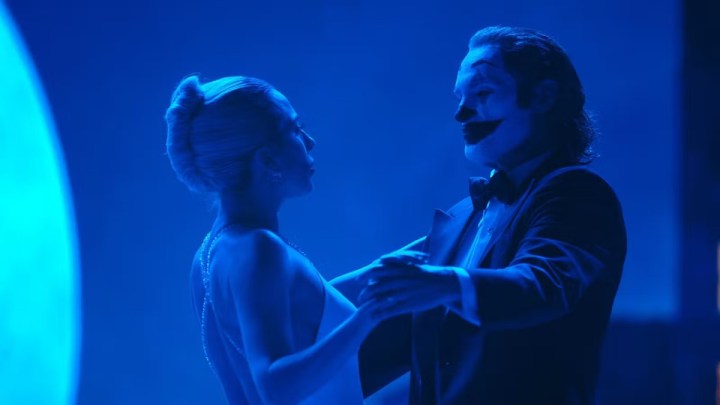
As in the original Joker, it is unclear just what message director Todd Phillips intended for the audience to take from the film. It is also unclear, even outside the musical numbers, just how much of what we are seeing is real. Part of this is due to Arthur being an unreliable narrator. Yet it is also due to Phillips’ inability to decide what type of movie Joker: Folie à Deux is supposed to be.
It has musical numbers, yet Phillips is insistent it is not a musical. The plot centers around a trial, yet there’s surprisingly little courtroom drama. And despite the addition of Harley Quinn and the trial being prosecuted by Harvey Dent, this is even less of a comic book movie than the original Joker.
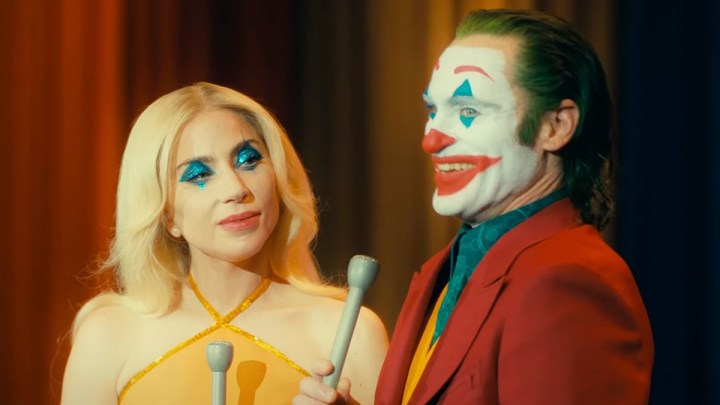
Despite this, I found myself enjoying Joker: Folie à Deux more than the original, for all its many flaws. Whatever artistic purpose the song and dance numbers serve, they are inventive and interesting. Lady Gaga slaps, even when she’s playing an untrained singer and playing that role well. While I checked the time repeatedly during this movie, I never did so during the songs.
I do have some thoughts on why the movie seems like a muddled mess and why almost everyone seems to hate it, but they do involve discussing the movie in detail. Suffice it to say, I wouldn’t recommend this movie even for the aforementioned music numbers, though it did inspire a good Lady Gaga jazz album. Skip to the text after the final picture if you wish to remain unspoiled.
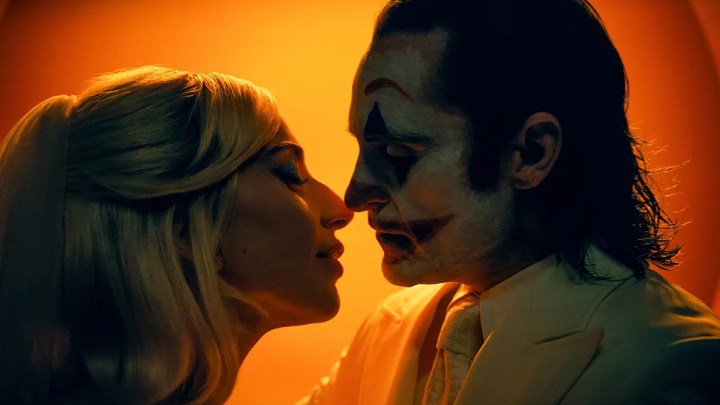
The outcry around against Joker: Folie à Deux is understandable in many respects. The arthouse aficionados who loved the first film for paying homage to Martin Scorsese and 70’s neo-Noir hate the new one because it is full of frivolous musical numbers. The Lady Gaga fans hate it because, much as her presence is promoted in the advertising, she’s barely in the movie, being on-screen for half an hour of a 138 minute movie.
Then there is the fact that it has less musical numbers than a proper musical, but not enough song-driven fantasy sequences to be the next Moulin Rouge. It has some tense courtroom scenes, but these are completely undercut by the musical elements. The real sticking point, however, is Joker: Folie à Deux is a raised middle-finger to everyone in Arthur Fleck’s fandom of incels and edgelords.
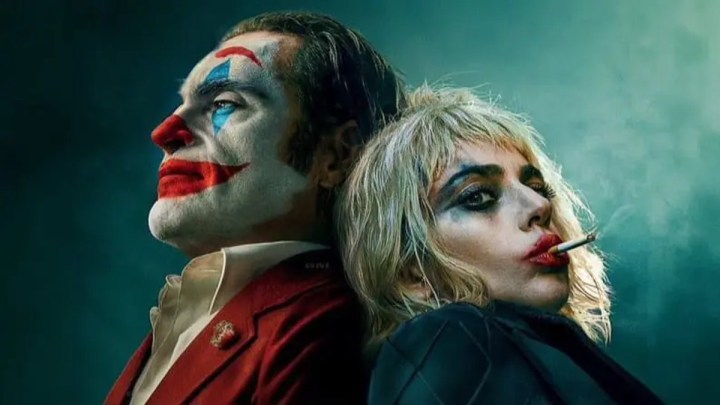
The trial sequences, which offer our only glimpses of the first film’s supporting cast, make it clear just what a pathetic figure Arthur Fleck is. The woman he imagined as his girlfriend didn’t think he was threatening and testifies that his own mother thought his dreams of stardom were stupid. The one friend he had at work speaks of his nightmares ever since watching Arthur murder their abusive boss. The irony is that their testimony might have sold the idea of Arthur and Joker being two people, if Arthur weren’t so determined to prove that there is no Joker at the end.
This is foreshadowed by the opening cartoon: a classic Looney Tunes style number, in which Arthur does battle with the shadow that tries to replace him and frames him for its crimes. The film’s other major other piece of symbiology involves the recurring image of people putting a gun to their own head. This is echoed by a Pepe LePew cartoon that airs repeatedly in the background, which foreshadows the entire Joker and Harley relationship.
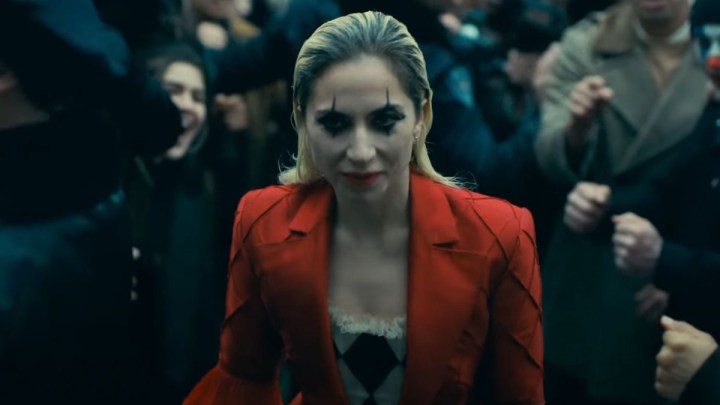
It seems apparent to me that Todd Phillips did not want to make a sequel to Joker. It was a one-and-done. Yet the executives at Warner Bros. Discovery, desperate to turn everything successful into a billion-dollar franchise, insisted on a sequel. I believe it is this attitude, more than anything, that explains the uneven nature of Joker: Folie à Deux. It would explain why this movie has a rather definite ending that allows almost no room for a sequel. It would also explain why, out of all the films he could make, Phillips made a sequel guaranteed to annoy everyone that liked the first movie.
I believe Todd Phillips has pulled a Bialystock & Bloom and made a guaranteed flop to free himself from having to make quirky DC Comics movies for the rest of his career. While I don’t think Todd Phillips is ready to fly to Rio with a suitcase full of cash, I do think Joker: Folie à Deux was a deliberate act of cinematic sabotage. I believe Phillips hoped this film might finally kill the demand for grim-and-gritty comic book adaptations. At least, that is my hope after watching Joker: Folie à Deux. It’s possible that, like Arthur Fleck, I am projecting my fantasy onto reality, but at least I’m aware of it.


 Kabooooom!
One thought on “JOKER: FOLIE A DEUX [Review]”