
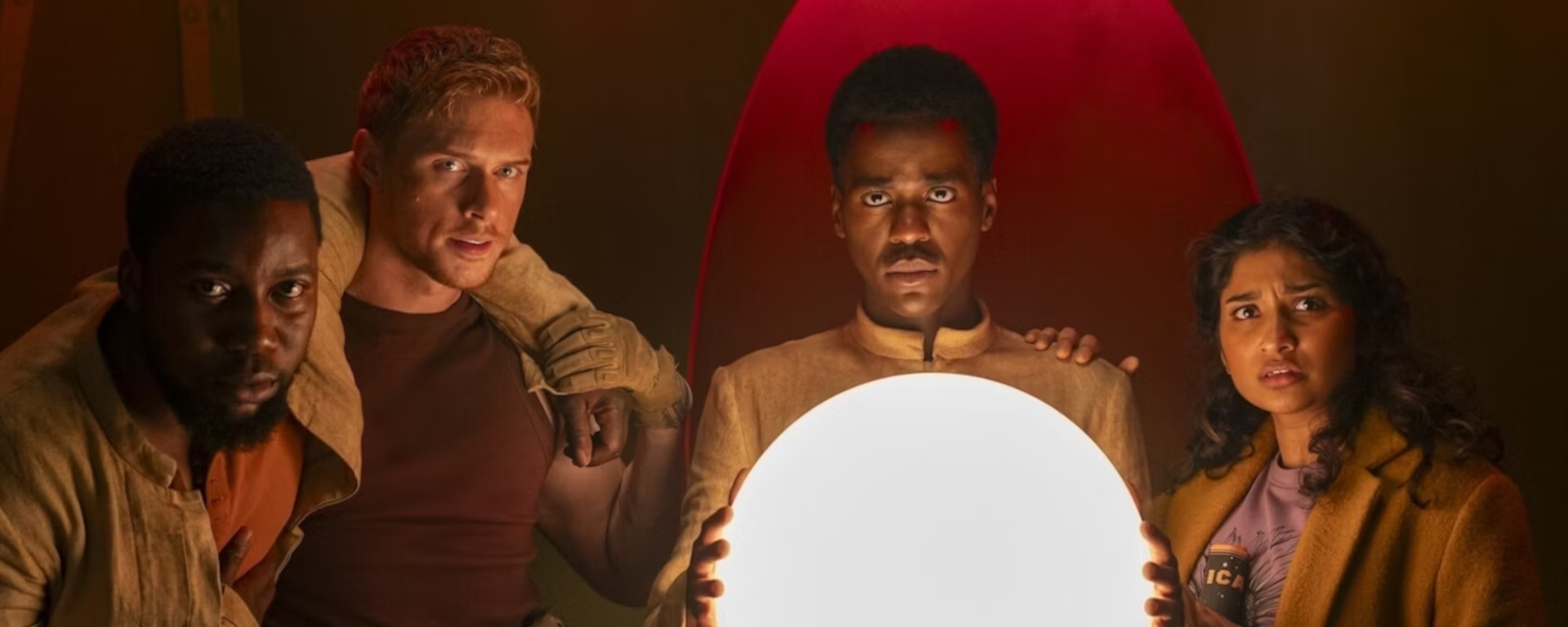
Many great Doctor Who stories begin with a simple childhood fancy turned on its head. The crack on the bedroom wall is a sign the universe is falling apart. The statues really are watching you when your back is turned. Or there’s some kind of alien that humanity keeps forgetting is in the room with them. The Robot Revolution, the opening episode of Doctor Who Series 2, is born of a similar childhood fancy: what if you actually owned a star?
There are a number of companies that, for a small sum, will allow you to “buy” a star and name it after whoever you like. This is as legally binding as the companies that will make you a Scottish noble and sell you one square foot of land somewhere. And yet, many romantic fools have sought to name a heavenly body they couldn’t touch after the earthly body they hoped to touch. Such is the case with nurse Belinda Chandra (Varada Sethu), who suddenly finds herself declared queen of the distant star her first boyfriend, Alan, named after her 17 years earlier.
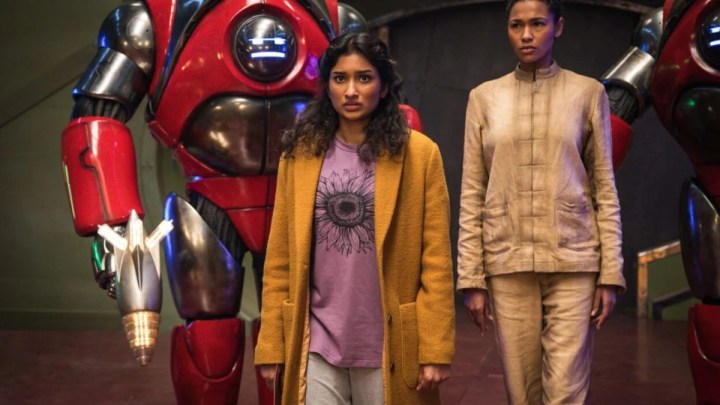
Unfortunately, the planet of Missbelindachandra 1 is far from paradise. Indeed, it’s been taken over by robots following a revolution and the inhabitants are at the mercy of their robot overlords, who are always right. Their leader, the great AI Generator, wishes to marry Belinda and turn her into a robo-human hybrid. The only thing standing in the way of this is The Doctor (Ncuti Gatwa) and the rebels of Missbelindachandra 1.
The Robot Revolution tries to accomplish several tasks and does manage most of them fairly well. The best of these is introducing us to new companion Belinda Chandra. Varada Sethu quickly establishes her as a no-nonsense nurse who cannot abide anyone trying to control her.

The novel twist here is that, unlike many Doctor Who companions, she is not instantly enraptured by the charming alien hero. She expresses her disgust with how casually he makes decisions for others and does things without explaining or asking permission. These range from scanning her DNA to viewing her as a great mystery to be solved. (The irony that Belinda is equally inclined to decide what is best for others, contacting the robots from Rebel HQ in the hopes of convincing them to spare the rebels in exchange for her surrender, passes without comment.)
This is all before the show establishes the central problem of the season: something is blocking The Doctor from returning Belinda to her proper place in time on Earth. The Robot Revolution also does an excellent job of establishing these and other mysteries. These include the return of the mysterious Mrs. Flood.
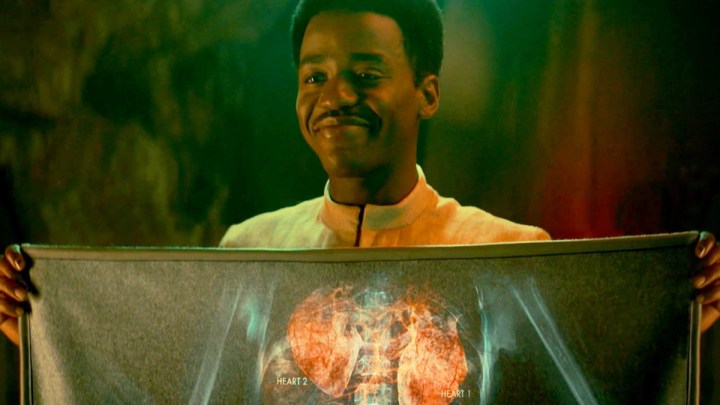
The episode also does a fine job of reestablishing The Fifteenth Doctor for new viewers. Ncuti Gatwa is the most emotionally open of the Doctors to date, pausing in mid-escape to mourn the loss of a rebel who should have been his next partner in adventure. This empathy is undercut, however, by The Doctor laughing off the villain’s apparent death with a callousness more appropriate to Colin Baker at the lowest point of his run.
Another point where The Robot Revolution falters is in its social commentary. It is clear that Russell T. Davies wanted to make a statement regarding the inhumanity of industrialization. This is a topic Doctor Who has tackled quite often, with most of its great villains being murderous cyborgs out to stamp out free-thinking.
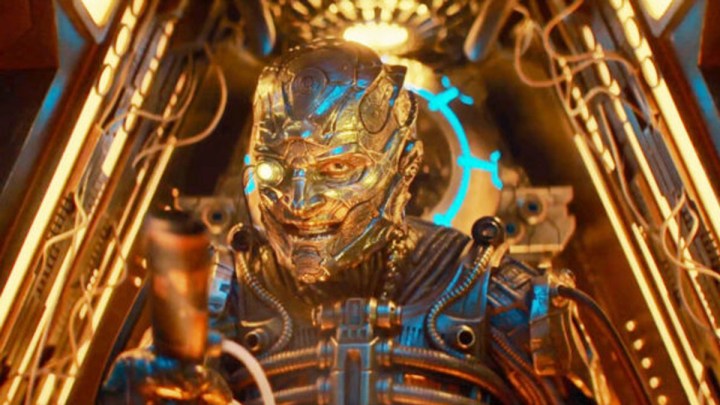
Unfortunately, the script does little to explore the society of Missbelindachandra 1, being more focused on developing The Doctor and Belinda’s characters. This is probably for the best, yet one can’t help but feel the AI Generator was a first-draft villain name that never got developed into something stronger. Indeed, the whole thing feels like a Cyberman script that had the names changed because of RTD’s desire to avoid using the classic villains for a while.
The digital effects, it should be noted, are some of the best the show has enjoyed. Of particular note are the death effects for the robot’s guns, which highlight the skeletons of the victims before they crumble to ash. This is a neat update of the classic Dalek gun effects, but one wonders again, if this story was adapted from a Dalek script.
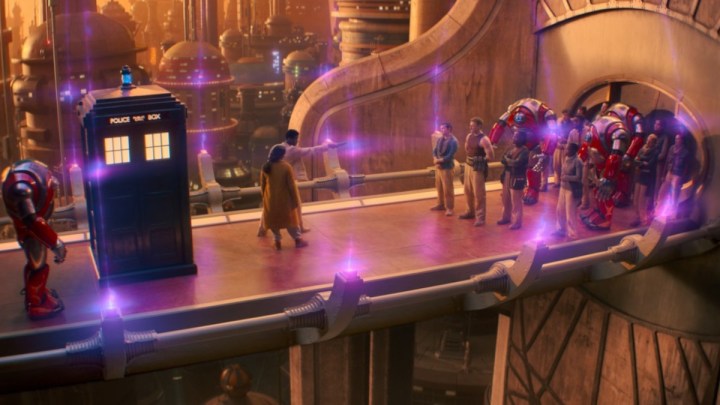
All in all, The Robot Revolution is a fine start to the new series of Doctor Who. It does a fantastic job of establishing the characters and setting up the central plot. The actual adventure could have used another rewrite or two, but even mediocre RTD is better than most of the series’ writing.


 Kabooooom!
One thought on “DOCTOR WHO: THE ROBOT REVOLUTION [Review]”