
It occurs to me with this, the final episode of Doctor Who Series 2, why I’ve had such a hard time reviewing most of the episodes this season. There’s too much exposition!
When writing a review, it’s my job to offer context for the story without spoiling the plot. That’s been rather difficult when so many of the stories this season were largely made up of the characters explaining things to other characters instead of doing things. Granted, that’s part and parcel of Doctor Who, which famously turned “I’ll explain later…” into a mantra. But Russell T Davies really went overboard with it this time around.

I can say this much. Many of the seemingly random elements I noted when discussing Wish World are explained here. Unfortunately, there is also a lot that will make various Classic Who fans alternatively punch the air in triumph or groan in despair. Worse yet, something happens in this episode that makes the Doctor’s torturing a terrorist in The Interstellar Song Contest seem far worse by comparison if any kind of thought is applied to it.
Nothing but SPOILERS beyond this image kids.

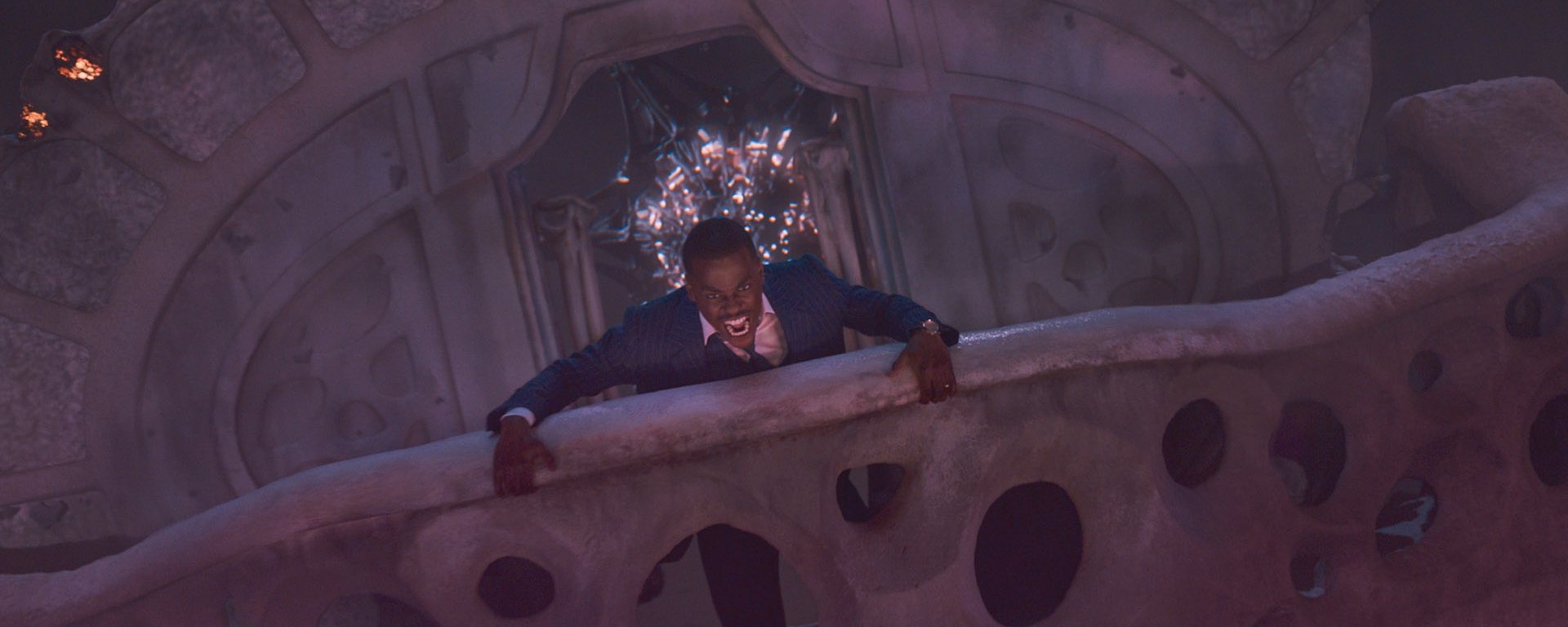
When last we left off, The Doctor was falling to certain death after learning The Ranis’ plan; to find the lost Time Lord founder, Omega. In Classic Who, Omega was said to be trapped in the anti-matter universe. This has been retconned to make him a prisoner of the Underverse – the same weird realm under the material plane which The Toymaker calls home.
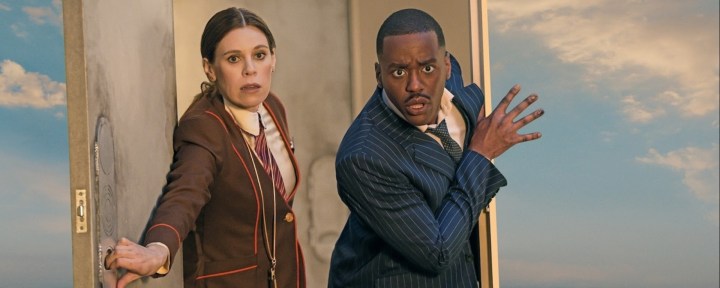
Thankfully, one of The Doctor’s good deeds pays off and he is saved by Anita; the hotel manager he helped give a new lease on life during Joy To The World. Now Manager of the Time Hotel, Anita has been watching out for the Time Lord and gave him an exit when he most needed it. She also helps him to reawaken his friends at UNIT by literally holding open the door to reality. Unfortunately, this still leaves the problem of how to save a child – the last Time Lord child – once reality asserts itself once The Ranis are defeated.
I don’t need to discuss the action of this episode. We know that The Doctor will win, if not without cost, and Omega will be driven back to the realm of myth. The problem is that Russell T. Davies drops a lot of lore and the explanations create more problems than they solve.
Vexingly, they also undo some of the best stories of Davies first run as showrunner. However, thinking on it, the stories he undoes are mostly written by Steven Moffatt. This may not be a coincidence given the random slam of the most popular New Who stories back in Lux. But I digress.

The biggest revelation here is that Time Lords are confirmed to be unfertile. There is no such thing as a Time Lord child, we are told. That tiny cheer you heard was every New Adventures reader rejoicing that Lungbarrow is now somewhat closer to being canon. The slightly louder “What?” you heard was every New Who fan shouting “Since When?” and wondering how that reconciles the Ninth Doctor’s talk about having been a father and grandfather, the Tenth Doctor counting every child lost on Gallifrey during the Time War, The Master being driven mad as a child while starring into the Time Vortex, the entire Timeless Child story arc, and the existence of Susan, the Doctor’s granddaughter.
Oh! And bigeneration, which was supposed to be a big Time Lord myth? That’s how Time Lords reproduce now. (Sorry Lungbarrow fans!)
Most of this can be hand-waved as a change in continuity thanks to all the wibbly-wobbly timey-wimey nonsense that happened during Flux or when The Doctor broke into the Underverse. This wouldn’t be the first time Doctor Who contradicted a large chunk of its history for the sake of one story. The problem is that the payoff isn’t really worth it.
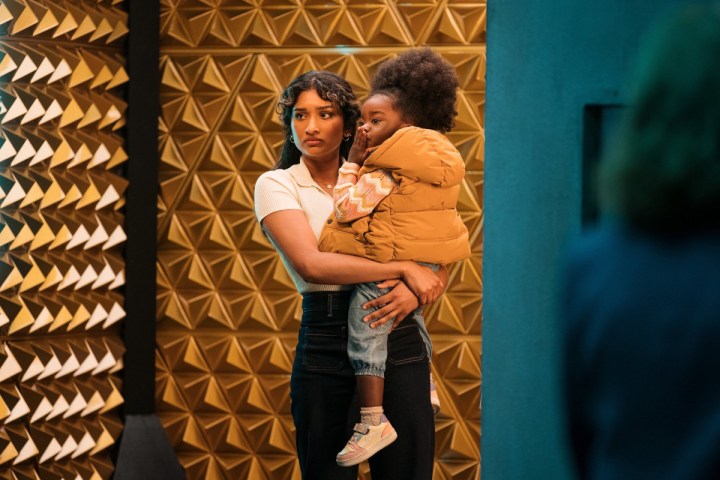
I commented before about how Varada Sethu had little to do in Wish World beyond scream about her baby. That issue is cranked up to 11 in The Reality War, as Belinda Chandra has her memories of who she really is restored. Yet she remains entirely focused on saving Poppy, the child born of her and John Smith’s marriage on Wish World. Granting that motherhood does tend to change most women’s priorities, not all women have an instant maternal instinct.
Belinda never got much characterization beyond “nurse,” “wants to go home,” and “low tolerance for men’s bullshit, including The Doctor.” Nothing in her six stories before this seemed to hint at her wanting to be a mom. It gets even worse when you consider that Belinda’s involvement in The Doctor’s life was indirectly set up by her sexist high school boyfriend. Her entire arc was defined by her not wanting to become a housewife/brood mare to some man. And yet, The Doctor rewrites reality so she becomes a mother, just so that Poppy can survive. The implications are unfortunate.

Facilitating this requires the Doctor to expend the last of the life energy for this incarnation. This leads to a surprisingly good scene, as The Thirteenth Doctor suddenly shows up in The TARDIS to deliver some words of encouragement. Specifically, about how change is difficult but necessary, and we all have to move on.
Jodie Whittaker is a marvel in this scene and it pretty much proves that she could have been a fantastic Doctor with better writing. Indeed, it makes one wish that we could have had two Doctors to fight the two Ranis. Alas, the magic of this scene is completely undercut by the ending and Ncuti Gatwa’s surprise regeneration into Billie Piper.

Don’t I mean the Sixteenth Doctor? No, because the credits say “And Introducing Billie Piper.” They do not credit her as The Doctor. This opens up the door to all manner of speculation as to what this may mean. Has an older and wiser Rose Tyler manifested into The TARDIS from the other universe? It this The Moment showing up to try and fix all the nonsense and establish a new status quo? Or is it literally Billie Piper playing Billie Piper in the Whoniverse? All are possibilities and equally likely at this point.
And yes, the irony of us getting Billie Piper returning to Doctor Who after a beautiful speech about moving on and not getting caught up in the past is another “What?” moment for me. I have mixed feelings, however, for while I love Piper as an actress, Rose Tyler as a character, and The Moment as a concept, I fear that her return means more of the show looking backward instead of forward. Particularly if Russell T. Davies remains as showrunner.
All in all, I think the good elements of The Reality War balance out the bad. That does not mitigate the problems, however, like Belinda Chandra getting what must be the single worst companion exit since Katarina shot herself into space in The First Doctor era. Still, like most of this season, it could have been far worse, yet should have been much better.


 Kabooooom!