
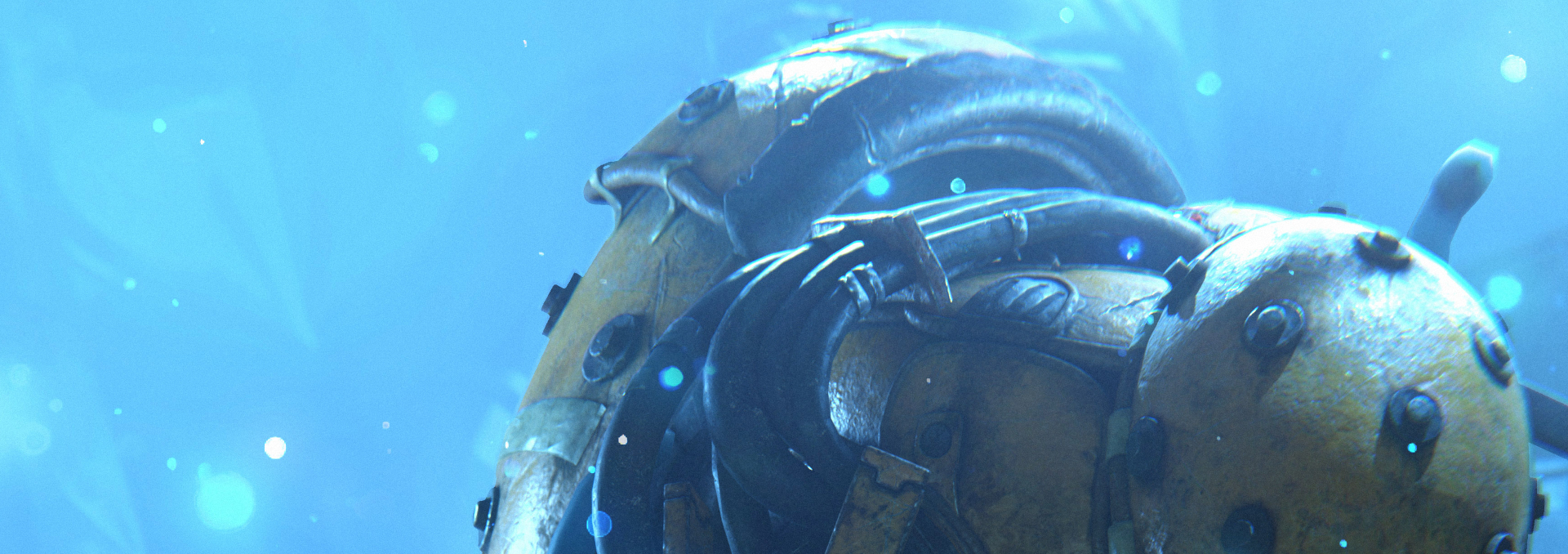
HUXLEY / Script and Art by BEN MAURO / Published by THAMES & HUDSON
1000 years have passed since the world was declared unsalvageable. The rich and powerful fled into space, leaving the teaming masses for dead in a nuclear wasteland. Still, humanity is nothing if not adaptable, but their salvation came not from within, but from the AI that took over what remained of civilization.
The AI bred and cloned elite humans capable of surviving in this dying world. Foremost among them were the Ronin, who kept order in the cities and searched the wasteland for resources. In this way, humanity, robot, and AI were able to survive.
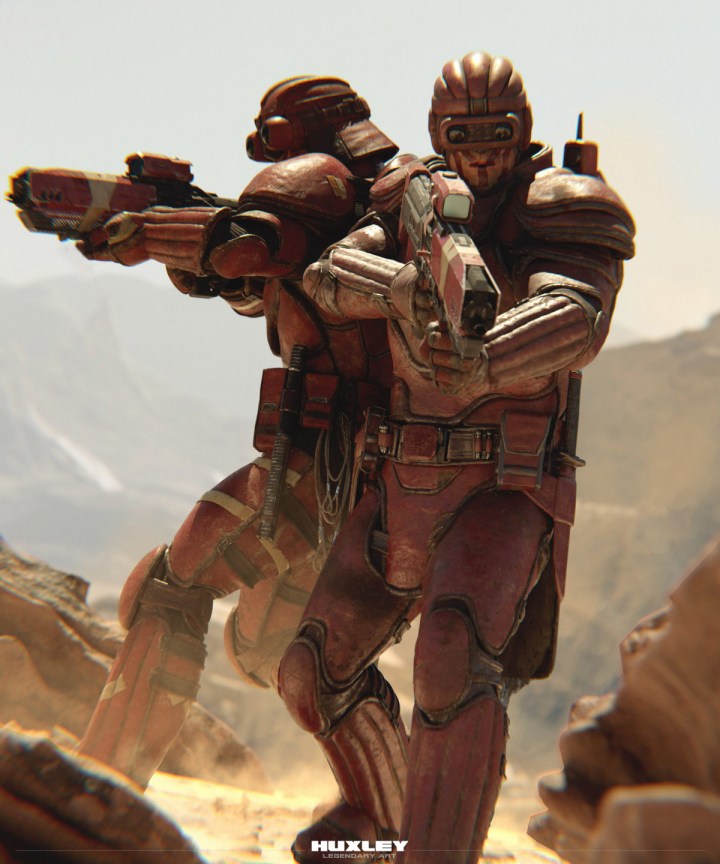
Max is a veteran Ronin, tasked with training the newly cloned Kai in all he should know. However, on a routine scavenging mission, they encounter an ancient robot in far better condition than any old model they’d ever seen. More, the robot still has power and is sane. He remembers the name Huxley and a woman’s face, but little else about who created him or why. The search for answers will lead the trio on a quest that could bring them wealth and freedom, and might even save the world.
Huxley is the brainchild of artist Ben Mauro. Odds are good you’ve seen some of Mauro’s work, even if you do not recognize his name. He has a rather impressive resume, and has worked with directors like, Peter Jackson, Guillermo del Toro, Luc Besson, and Neill Blomkamp. Huxley is his first graphic novel, but you’d never suspect it from reading it.
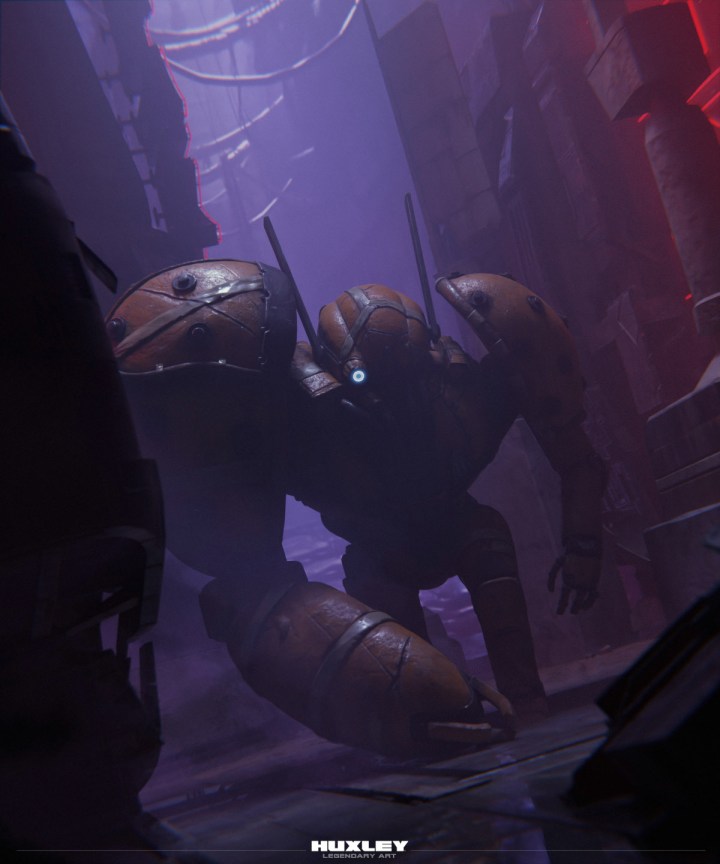
Mauro describes himself as a world-builder, which explains much of the general construction of Huxley. The characters are the usual stock sci-fi heroes and the plot is a standard hero’s journey. The script is highly expository, as we are introduced to a dying world that may or may not be Earth. Thankfully, this is justified, as Max is showing Kai the ropes of being a Ronin, and they both have to explain things to the amnesiac Huxley.
What ultimately sells this graphic novel is the setting and the style.
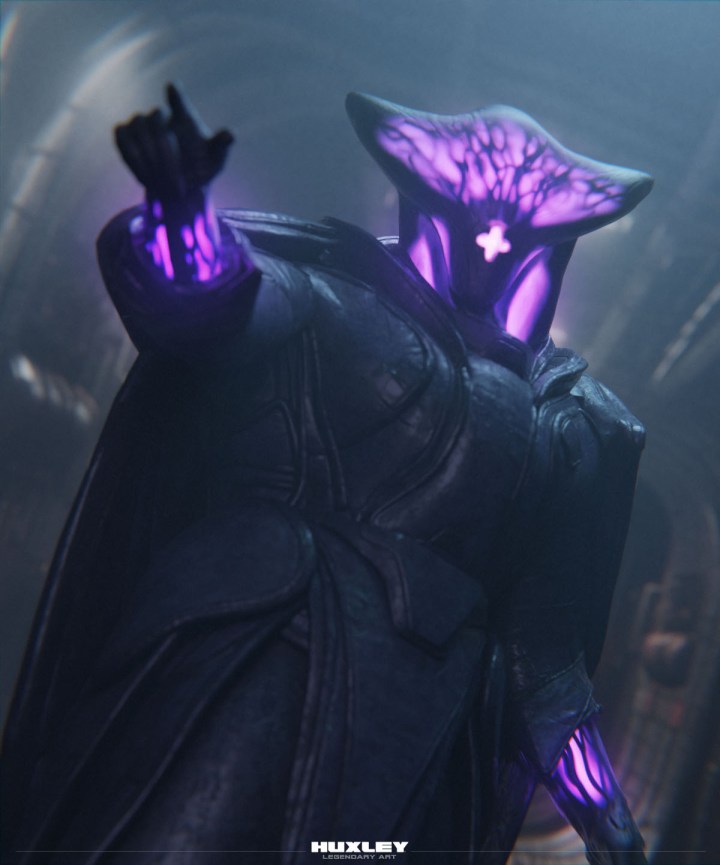
The visuals are amazing and truly unique. The character designs are memorable, which is fortunate as the ensemble are all in armor that obscures their faces or robots without definable facial features. It should also be mentioned that the back of the book details Mauro’s process, showcasing the original pencil sketches before painting.
Huxley is worth checking out for the visuals, even if one is not a fan of science-fiction. Fans of science-fiction, however, particularly fans of Heavy Metal Magazine, should consider Huxley required reading.


 Kabooooom!