

SYSTEM PREFERENCE / Script and Art by UGO BIENVENU / English Translation by EDWARD GAUVIN / Letters by TOM WILLIAMS / Published by TITAN COMICS
System Preference has been sitting on top of my “to be reviewed” pile for over two months. There is no excuse for this beyond life being life and bad timing. And yet, it is good timing, for it enabled me to finally read and review this book just in time for creator Ugo Bienvenu’s feature film debut. (That would be ARCO – releasing internationally on November 14.)
Ugo Bienvenu is best known to American audiences for their work on the Ant-Man animated series. However, they have been creating art and graphic novels for many years. System Preference is the most recent of these and was translated into English by Titan Comics.
The world of System Preference is physically bright yet spiritually dark. Set in the not-too-distant-future, it is a world where storage space and the Next Big Thing are more important than art and history. The decision of what gets saved is made by an algorithm, with archivists now being used to find material for deletion and critics arguing what should be saved.
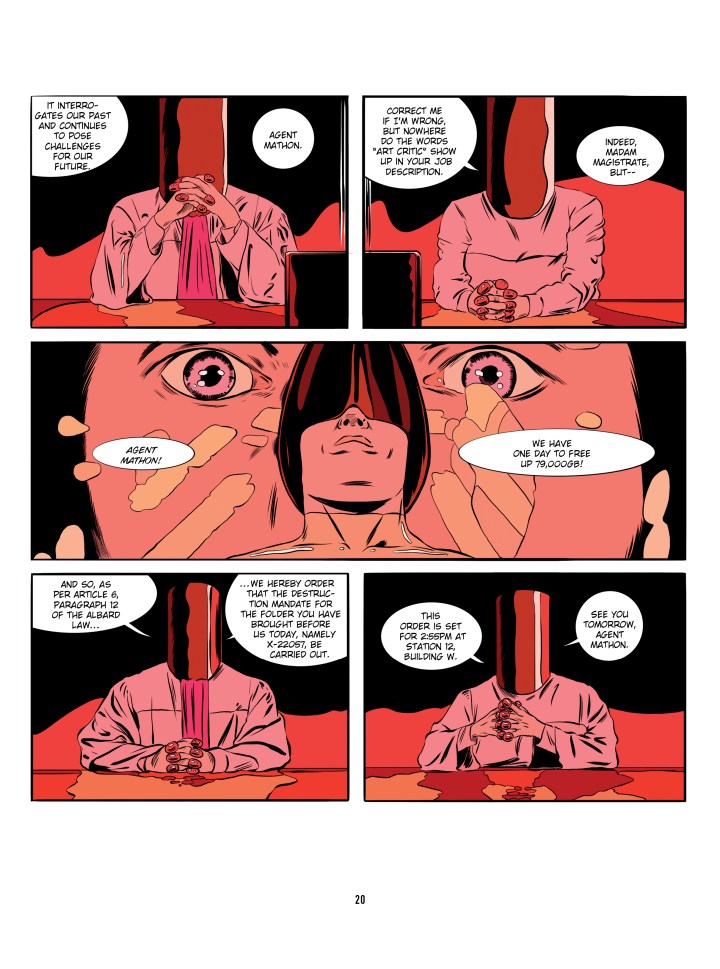
The story starts off centering around Yves Mathon – a disillusioned archivist, who has secretly been saving the movies, literature, and art that he is meant to be preparing for deletion. The modern world seems increasingly shallow to him. From the fact that his job does not truly archive anything, to the fact that his shallow wife is devoting all her energy to an advertising campaign that is considered more worthy of storage space than the works of Victor Hugo. To drive the metaphor home, the task of gestating their child has been given to a nanny robot – decided to be so much more efficient than the old ways of natural birth.
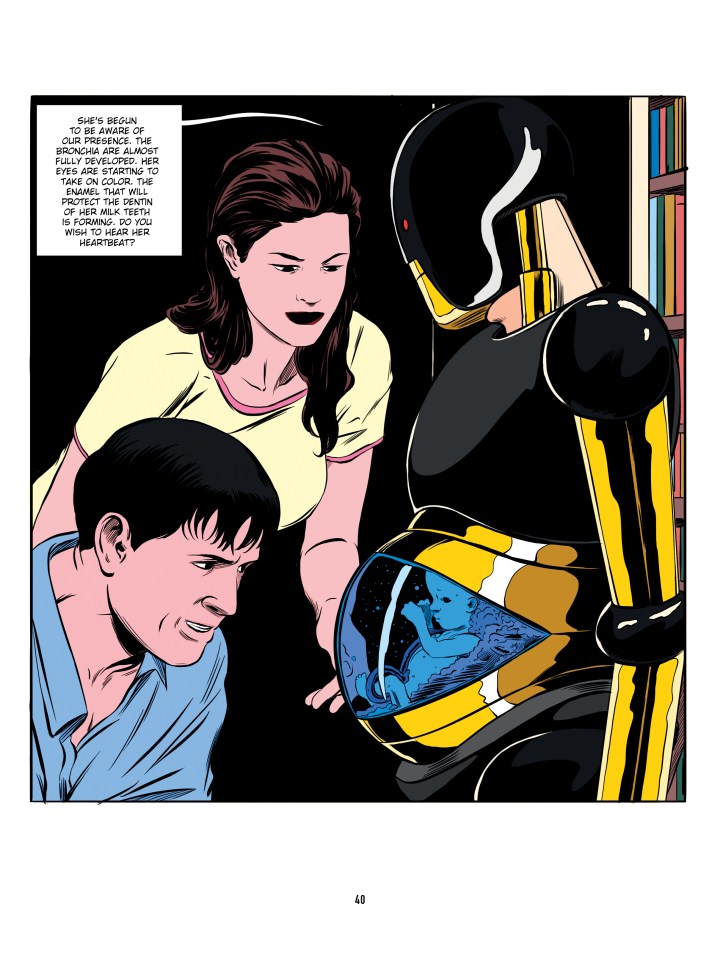
Comparisons to Fahrenheit 451 are inevitable and apt. Yet Bienvenu goes further than Bradbury in exploring the themes of how mechanization poisons the soul of humanity. He also goes on to explore the themes of what constitutes humanity, as the nanny robot Miki grows into an unexpected sounding board for Yves when his wife no longer listens to him. In this, System Preference mimics the best works of Rod Serling, Terry Gilliam, and Stanley Kubrick.
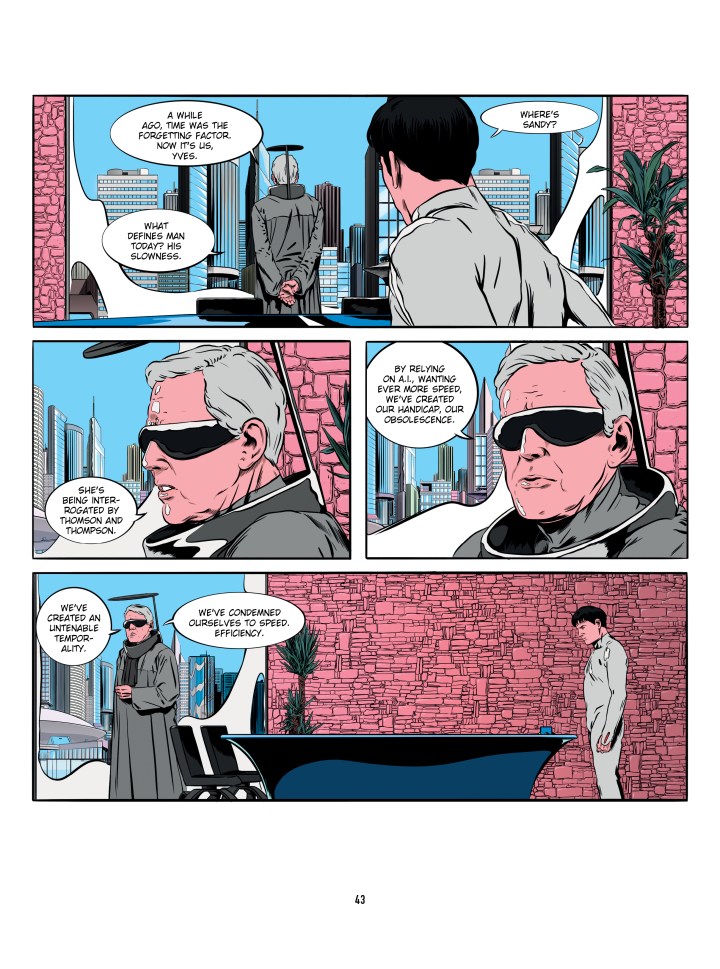
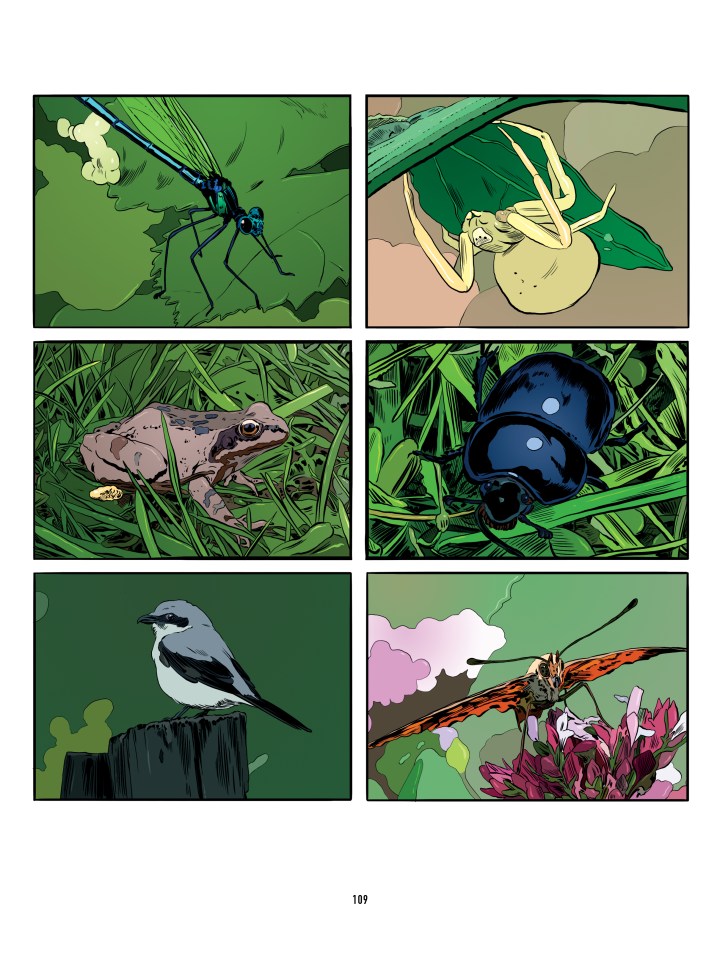
The artwork is similarly understated, yet capable of delivering powerful ideas with surprising subtlety. Indeed, the mundanity of Yves’ life is underscored by the suddenly vibrant colors of the natural world amid the dull greys and pastels that define the modern world. Even the blue of the sky above seems a relief from the technological terrors of this dystopia. The sum total is a visual masterpiece.
Admittedly, it’s possible System Preference touched me deeply as an archivist who finds himself increasingly disillusioned because of artificial intelligence and the minimization of humanities studies in his work. I may be biased in finding it as good as I did and regretting it took me so long as it did to finally read it and write this review. But that’s okay. I am only human, after all, and System Preference makes me rejoice in that fact.


 Kabooooom!