
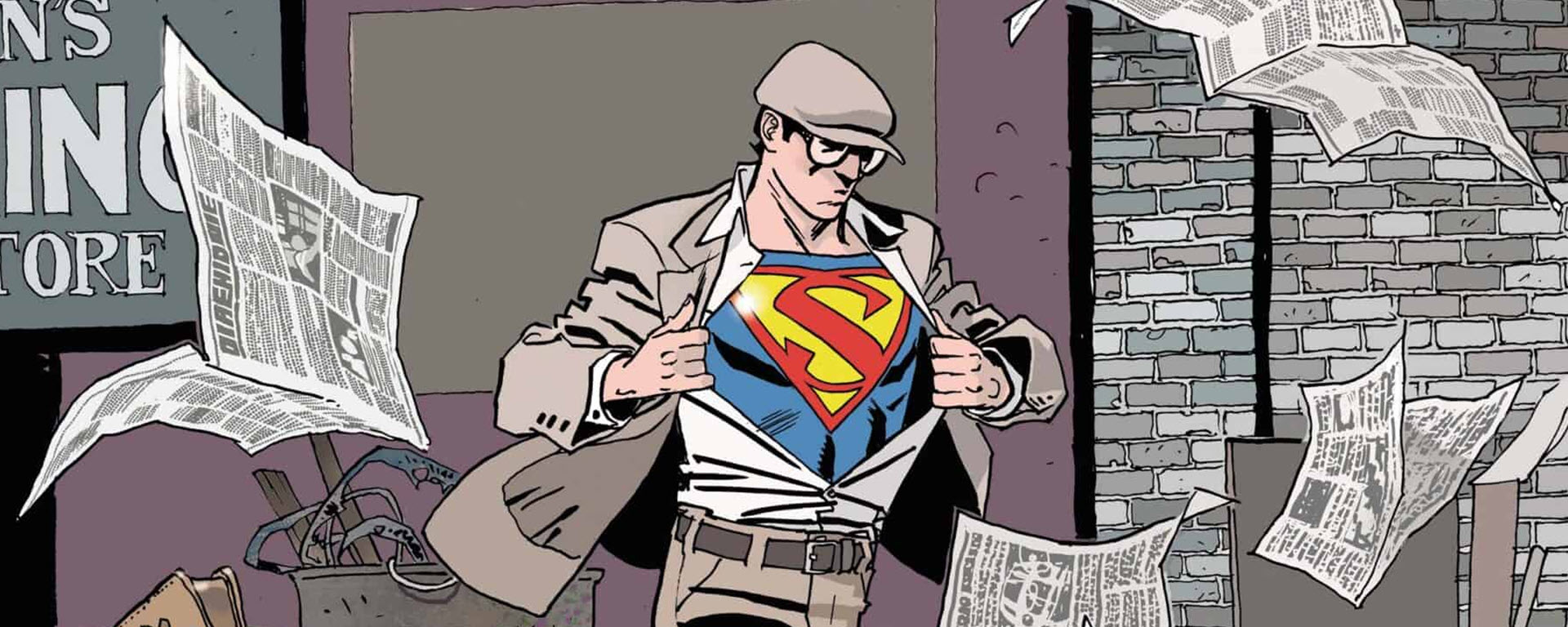
SUPERMAN: THE STRANGER #1 / Script and Art by WES CRAIG / Colors by JASON WORDIE / Letters by TOM NAPOLITANO / Published by DC BLACK LABEL
Superman has become an indispensable part of Americana. Thanks to his many film and television adventures, there are few who don’t know his story, Last Son of Krypton, raised by Ma and Pa Kent to be a good man. Few remember, however, that the Kents and Krypton were later additions to the mythology.
Originally, Clark Kent grew to maturity in an orphanage. He had no clue as to his origins or the source of the powers he slowly acquired as an adult. And of course he was only leaping tall buildings in a single bound rather than flying in the late 1930s. Superman: The Stranger takes us back to that point in time. However, it also explores several angles that the Golden Age comics, for all their progressive punch, never considered.
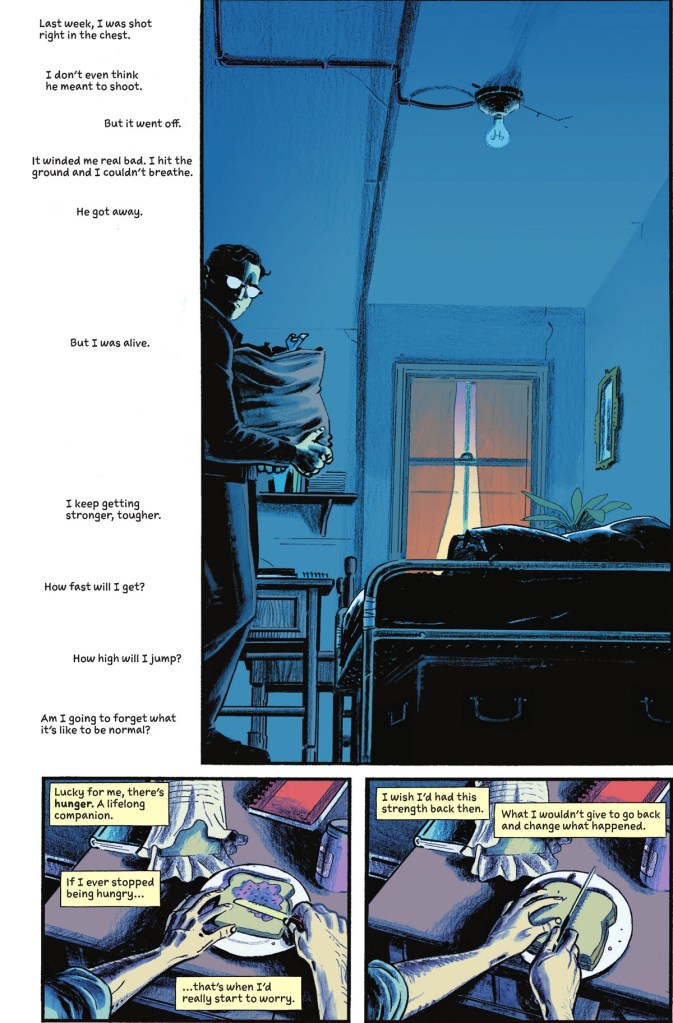
As our story opens, Clark Kent has just been hired at The Daily Planet. However, it is as an assistant janitor, not a writer. Times are tough with the Great Depression still raging and another world war on the horizon. Still, Clark is thankful for what he has, and works through his hunger to try and use his powers to help people. At the same time, business magnate Lex Luthor is building up his company and he is not particular about the legalities. For he has dreams of a new American empire, with himself as the leader.
There are a lot of levels to Superman: The Stranger and all of them work wonderfully. As a historical piece, it captures the realities of life in America during the Great Depression quite well. However, as a character study of both Superman and Lex Luthor, I think it works even better.
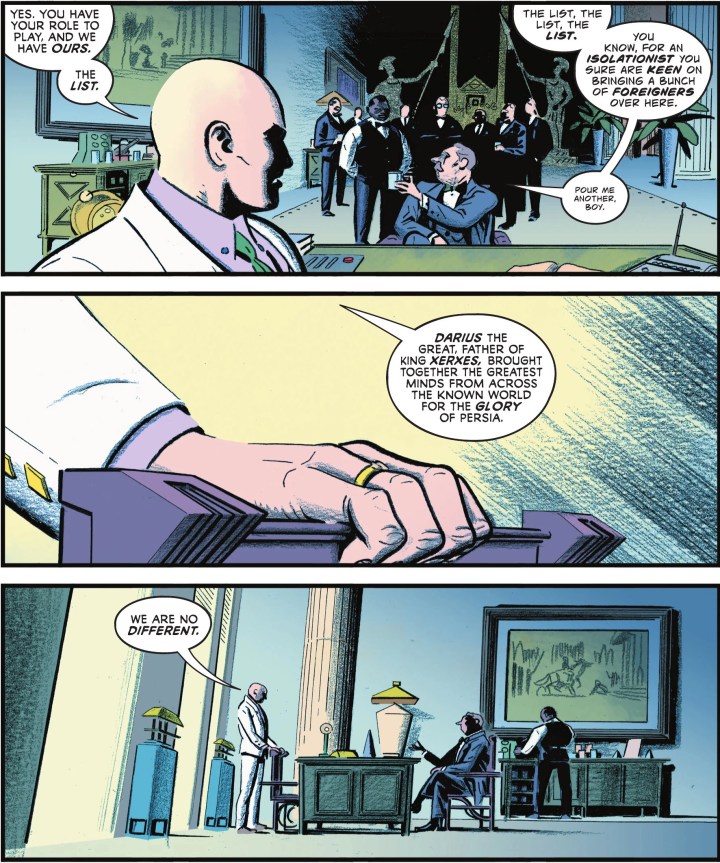
Of course the idea of Lex Luthor as a corporate criminal was not introduced until the 1980s. However, that image is easily adapted into a post-Gilded Age robber baron in the same mold as Henry Ford. And while Craig does not overly explore this point, any student of history can probably presume what scientists Lex Luthor is seeking to bring into his employ to boost his scientific studies.
Contrastingly, Craig’s take on Superman is true to the populist perspective of the classic Siegel and Shuster comics. That viewpoint is also subtly transposed into the artwork. Superman is constantly depicted looking up. Not only to the stars that he does not know are his origin, but also to the skyscrapers owned by the people who are truly responsible for the sad state of the country. Luthor is likewise depicted constantly looking down; if not from his penthouse, than looking down his nose at his servants and flunkies.
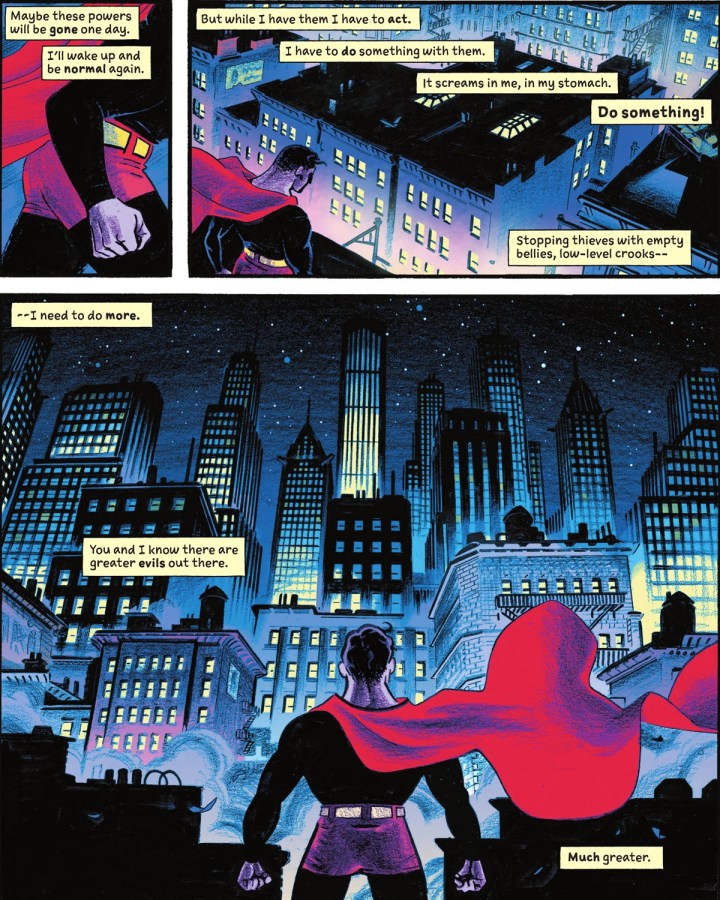
Craig’s art perfectly captures the rough feeling of the classic Golden Age comics, as do the simple four-color palettes used by Jason Wordie and the letters of Tom Napolitano. Indeed, the book evokes the Great Depression era in tone, setting, and aesthetic. Yet there is also a timeless quality to Superman: The Stranger.
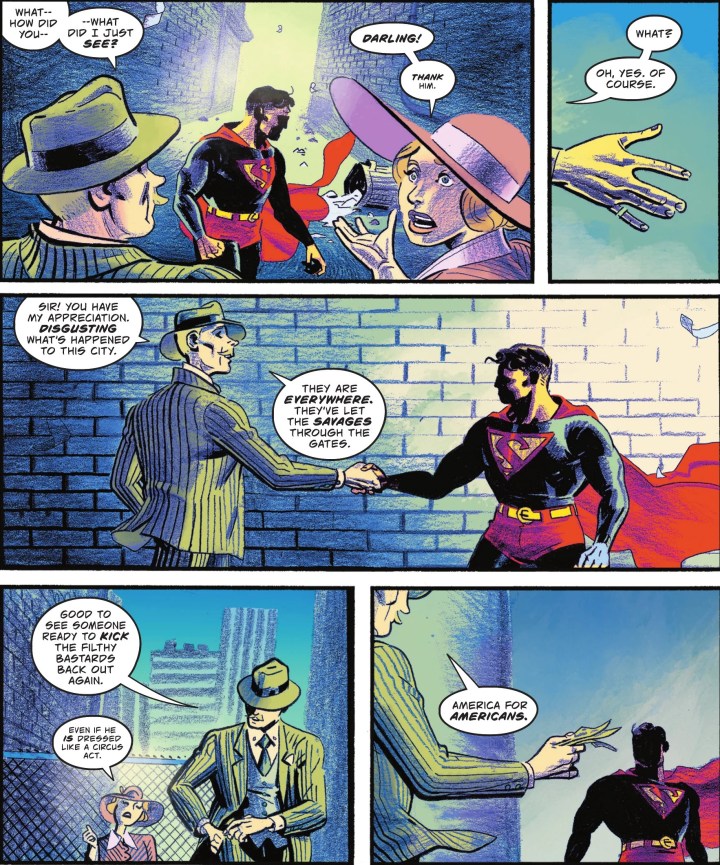
At its core, the story of this Clark Kent is that of the immigrant experience in America. It is the story of a refugee trying to build a life for himself and determine who he is. However, it is realistic about the American Dream being far more accessible to some than others. This is driven home when Superman saves a rich couple from a mugger, only to realize the mugger (who cannot speak English) is as desperate and driven by hunger like himself. Worse still, the couple are racist and assume that Clark is motivated by attacking the alien rather than helping the needy.
The usual suspects will doubtlessly dismiss Superman: The Stranger as a woke reimagining of the Man of Steel. In truth, it cuts to the classic core of the character far better than any Elseworlds story in recent memory. This is one to read if you’ve ever believed that a man can fly.


