
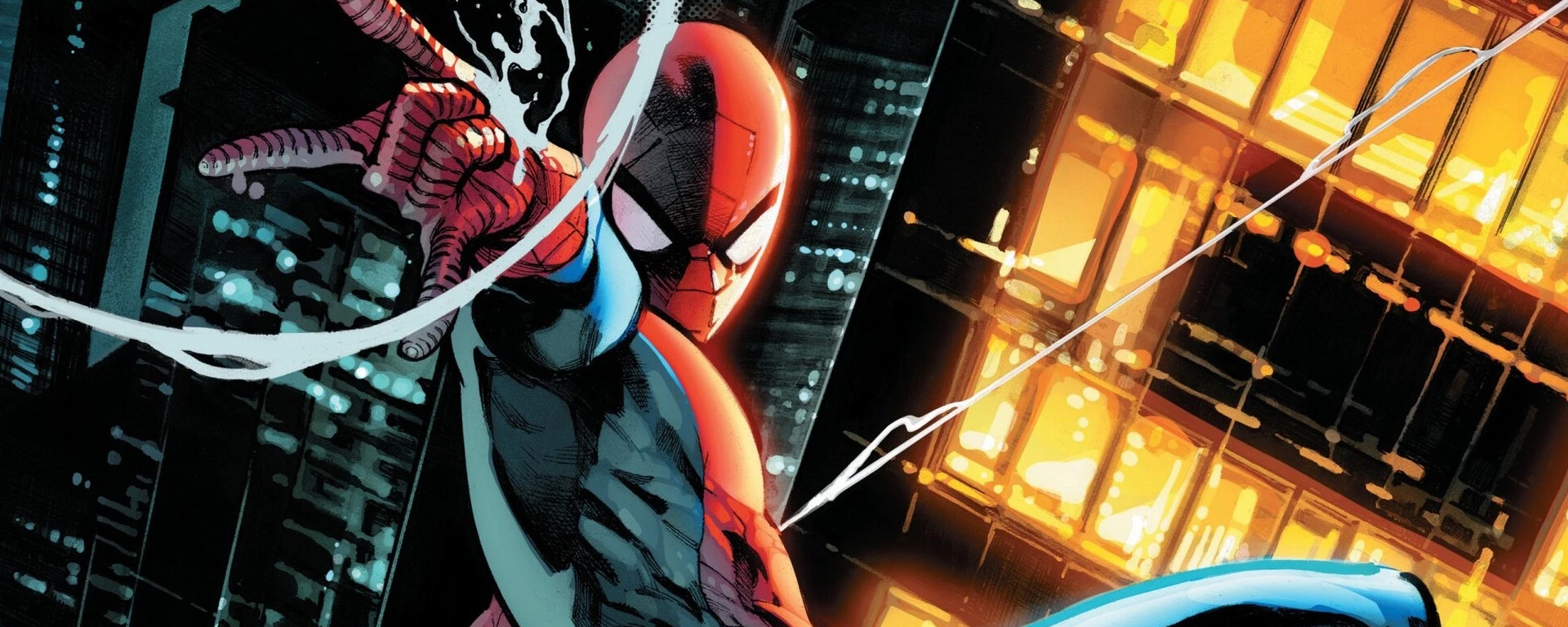
AMAZING SPIDER-MAN #1000 / Scripts by JOE KELLY, NOAH HAWLEY, J.M. DEMATTEIS, FRANK MILLER, TRIPLE H, ROB FEE, BRIAN MICHAEL BENDIS, LARRY LIEBER & DAN SLOTT / Art by PEPE LARRAZ, PATRICK GLEASON, HUMBERTO RAMOS, VICTOR OLAZABA, PEACH MOMOKO, ED MCGUINNESS, STUART IMMONEN, GIUSEPPE CAMUNCOLI, KLAUS JANSON & MARCOS MARTIN / Colors by FEDERICO BLEE, MARCIO MENYZ, ERICK ARCINIEGA, EDGAR DELGADO, PEACH MOMOKO, MARK FARMER, MARTE GARCIA, RACEHELLE ROSENBERG & MUNTSA VICENTE / Letters by VC’S JOE CARAMANGA / Designs by JAY BOWEN / Published by MARVEL COMICS
The problem with landmark issues is that there is some need to have a landmark story. Failing that, the issue should consider the whole of the character’s history until that point. Amazing Spider-Man #1000 is a failure on the first point and barely manages the second. And even then, it seems more by accident than design.
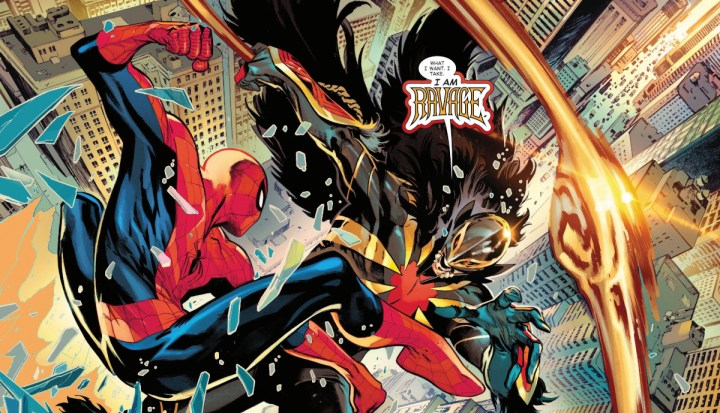
The main story by current creative team Joe Kelly and Pepe Larraz pays off the current monthly storyline and introduces a shocking new villain. Shocking, that is, perhaps to anyone who has never read a superhero comic in general. Or a Spider-Man comic in particular. Kelly and Larraz have both done better work and this chapter feels rushed and more like an obligation than a revelation.
It is not just that the base concept behind Ravage (i.e. villain tries to replace Spider-Man out of jealousy) has been done before. It is that it has been done before and done far better by stories that weren’t that good. The whole Superior Spider-Man saga and Kraven’s Last Hunt come to mind. Debatably every Venom story during the Lethal Protector days might qualify too. Mostly, however, it reminds me of Howard Mackie’s last storyline in 2000, which featured a nameless telepathic Mutant who tried to fake Mary Jane’s death and take over Peter’s body primarily because they were a blank slate who seemed more like a plot point than an actual character. That’s Ravager in a nutshell.
Talking of Mary Jane, there’s a curious absence of our favorite redhead spitfire in this issue. Even the few stories where she appears don’t include her in an active role and seem to be set out of the current continuity. Chief among these are “Requiem For A Goblin”, which follows up on J.M. DeMatties’ “Best of Enemies” in Spectacular Spider-Man #200. This one is a great story, but Humberto Ramos was an odd choice to provide the art. There’s also the equally excellent yet equally odd “Of Webs and Six-Guns,” which seems to exist only to justify a team-up between Spider-Man and the Rawhide Kid because they’re both motivated by the death of an Uncle Ben.
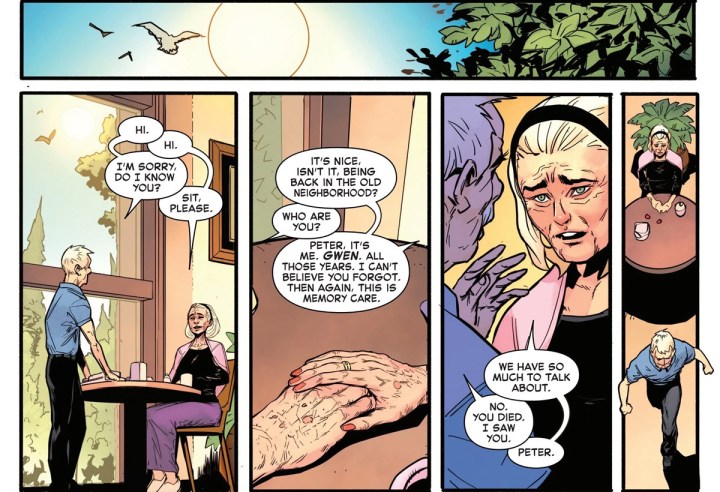
Strangely enough, the story where MJ has the strongest influence is the one where she’s only seen in a photo. “Still Standing” centers around a retired Peter Parker, whose red-haired grandson has taken over the Spider-Man name, as Peter enjoys his golden years. All well and good, until Peter starts seeing a woman claiming to be Gwen Stacy. Usually I’m not a fan of stories which suggest Peter never got over Gwen and that Mary Jane was his second choice, but this one surprised me with how sweet it was.
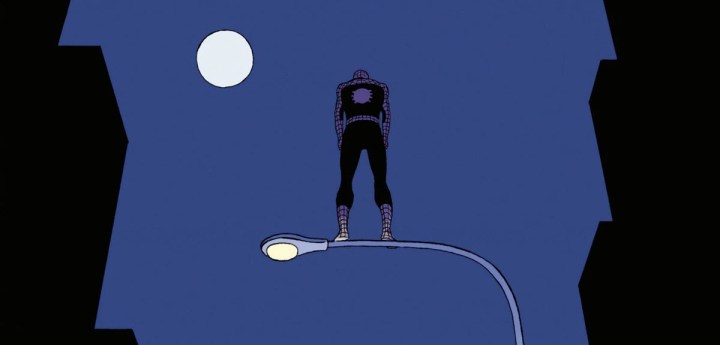
Another story that surprised me is the last one, “I Can Never Rest,” by Dan Slott and Marcos Martin. Beyond art and a story that evokes the classic Marvel collaborations of Jeph Loeb and Tim Sale, this one offers a new perspective on Spider-Man’s origins. Less dramatic but equally touching is “The Gesture” by Brian Michael Bendis and Stuart Immonen. The fight making up most of the page span is merely decent, but the final page speaks to how well regarded Peter Parker is by his peers
Overall, Amazing Spider-Man #1000 is an okay anthology. There’s enough good here to make it worth a read. However, it will mostly leave you thinking of better stories and wanting to reread those..


